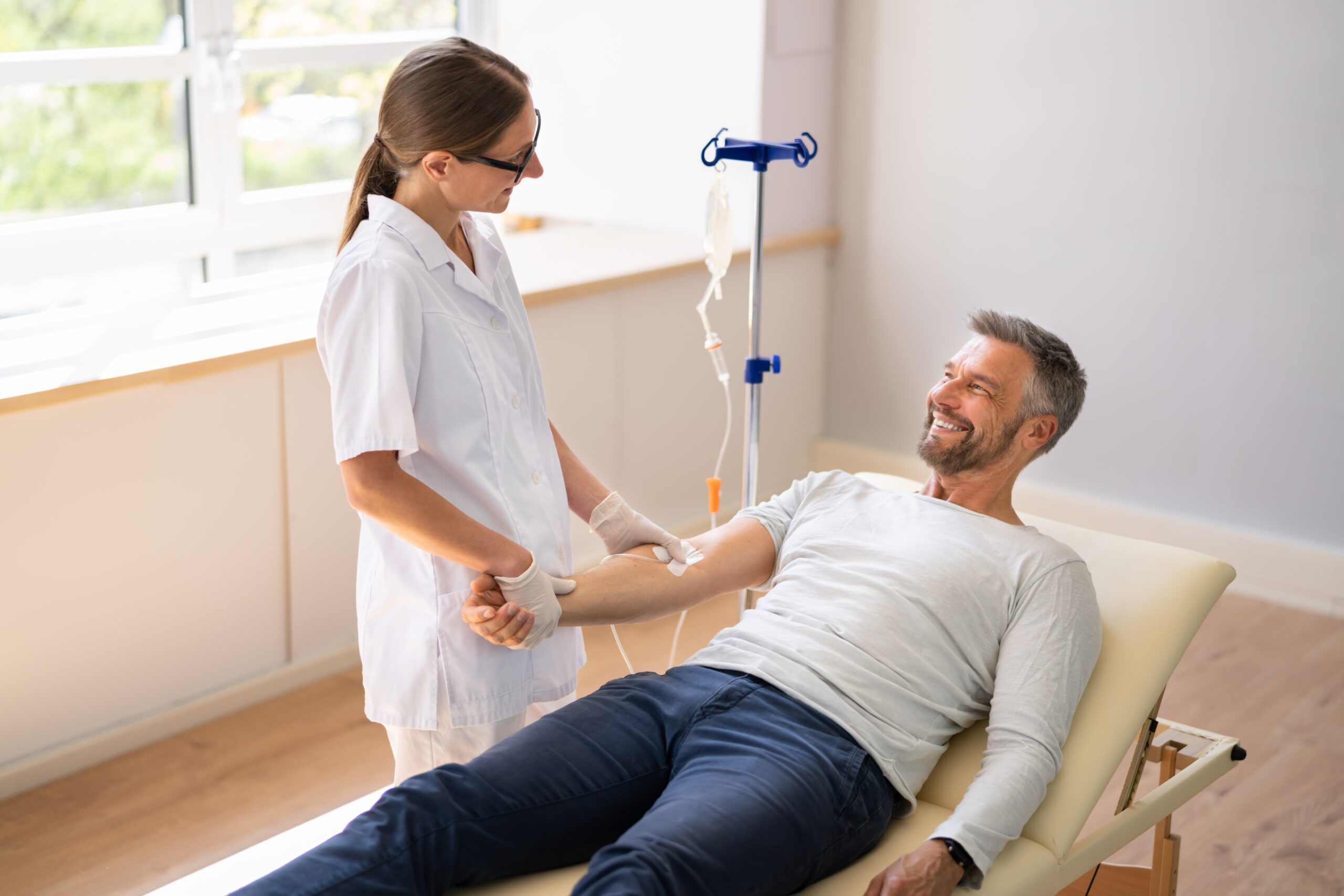
IV hydration therapy for hangovers and dehydration follows a fairly straightforward process: a provider consultation, a brief screening, sterile fluids with electrolytes and selected vitamins, and roughly 30 to 60 minutes in a monitored chair. At Nova IV Therapy, every infusion is provider-directed and administered under licensed medical supervision by our licensed providers, using calibrated medical equipment and sterile protocols. Below is the physiology, the process, the honest limits, and the questions worth asking before your first session.
What Is IV Hydration Therapy?
IV hydration therapy is the delivery of sterile fluids, electrolytes, and selected vitamins directly into a vein through a small catheter. Because the infusion bypasses the digestive tract, fluids and nutrients enter circulation immediately, which matters when nausea, vomiting, illness, or heat exposure has made drinking enough water difficult or impossible.
Hangovers are often described as a headache problem. Physiologically, they’re closer to a fluid-and-electrolyte problem with an inflammatory component layered on top. Alcohol suppresses vasopressin, the hormone that tells your kidneys to conserve water, which increases urine output and drags sodium, potassium, and magnesium out with it. Add poor sleep, low blood sugar, and gastric irritation, and the result is the familiar combination of headache, fatigue, nausea, and mental fog.
Most hydration infusions begin with a base fluid, typically normal saline or lactated Ringer’s solution. From there, providers may add B-complex vitamins, vitamin C, or magnesium depending on your history, symptoms, and clinical appropriateness. Anti-nausea medication is sometimes included when a patient can’t keep fluids down.
Nova IV Therapy offers hydration-focused infusions alongside the Myers’ Cocktail and other provider-directed IV care plans. We are not a retail IV lounge or menu-based service. Each visit begins with listening, and the formula follows the assessment rather than the reverse.
How IV Hydration Therapy Works: Step by Step
A standard IV hydration session usually takes about 30 to 60 minutes from start to finish. After a provider reviews your symptoms and vitals, a small catheter is placed in a forearm or hand vein, connected to a 500 to 1,000 mL bag of sterile fluid, and infused at a rate appropriate for your health status while you’re monitored throughout.
Here’s the sequence in practice:
- Intake and screening. Your provider reviews current symptoms, estimated fluid losses, medications, supplements, allergies, kidney and cardiac history, and pregnancy status. Vitals are taken, including blood pressure and heart rate. A provider consultation is required before your first infusion.
- Formula selection. Fluid volume, infusion rate, and any additives are chosen based on that assessment. This step is individualized, not menu-driven.
- Catheter placement. After the skin is cleaned, a small flexible catheter is inserted using sterile technique. You’ll feel a brief pinch. The needle is withdrawn once the catheter is in place, so nothing rigid remains in your vein.
- Infusion and monitoring. The bag runs by gravity or pump while staff check the site and how you’re feeling. Most patients read, work, or rest.
- Removal and aftercare. The catheter comes out, brief pressure is applied, and a small bandage is placed. Most people resume normal activity right away.
What does it actually feel like? Cool, mostly. Room-temperature fluid entering a vein produces a mild cool sensation along the arm that fades within a few minutes. B vitamins can create a passing vitamin taste at the back of the throat, and magnesium sometimes brings a warm, heavy feeling that many patients find relaxing.
Relief tends to arrive gradually rather than all at once. Nausea often eases first, followed by headache and fatigue as plasma volume and electrolyte balance improve. Individual results may vary, and the degree of improvement depends heavily on how depleted you were when you arrived.
Benefits of IV Hydration for Hangovers and Dehydration
Intravenous delivery is most useful when the gut isn’t cooperating. That single fact explains most of the clinical value here.
Why Does Intravenous Delivery Help When Water Won’t Stay Down?
Oral rehydration depends on a stomach and intestine that are working normally. When alcohol has irritated the gastric lining, or when an illness has triggered repeated vomiting, absorption becomes unreliable no matter how carefully a patient sips. Intravenous fluid removes that variable entirely, since the full volume enters the bloodstream directly and begins restoring plasma volume from the moment the infusion starts.
- Rapid rehydration when oral intake fails. If nausea or vomiting prevents you from keeping water down, an infusion restores plasma volume without asking the stomach to participate.
- Targeted electrolyte replacement. Alcohol-related diuresis depletes sodium, potassium, and magnesium. Balanced crystalloid fluids and provider-selected additives address those losses directly.
- B vitamins and vitamin C. B-complex vitamins act as cofactors your body uses in energy metabolism, while vitamin C supports antioxidant defense systems. Both may be considered in the context of increased physiological demand or reduced absorption.
- Symptom-directed additives. Anti-nausea and anti-inflammatory medications are sometimes included when clinically appropriate, which can make the difference between tolerating fluids and not.
What Else Can IV Hydration Therapy Support?
Hangovers draw the most attention, but IV hydration therapy for hangovers and dehydration relies on the same physiology that applies after a stomach virus, a feverish week, a long flight, or a demanding training block. In each of those situations the underlying issue is a fluid and electrolyte deficit, and the supportive approach looks broadly similar once a provider has confirmed clinical appropriateness for that patient.
- Applications beyond hangovers. Gastrointestinal illness, fever, summer heat, long-haul travel, and hard endurance training each create fluid losses that hydration support can address.
- Convenience with supervision. Sessions are short, and care is delivered with calibrated medical equipment and sterile protocols rather than improvised setups.
Now the honest part. IV hydration therapy addresses fluid and electrolyte deficits and the symptoms that follow from them. It does not remove alcohol from your bloodstream, lower your blood alcohol concentration, or protect the liver from alcohol’s effects. Only time metabolizes alcohol. Any practice suggesting otherwise is overselling, and we’d rather you hear that plainly.
IV Hydration vs. Water, Sports Drinks, and Oral Rehydration
For mild dehydration, oral rehydration works well and costs very little. The case for intravenous fluids strengthens as symptoms worsen or as vomiting blocks the oral route entirely.
| Option | Absorption speed | Electrolyte precision | Best use case |
|---|---|---|---|
| Plain water | Slower; depends on gastric emptying | None; can dilute sodium if intake is very high | Mild thirst, general daily hydration |
| Sports drinks | Moderate | Sodium and some potassium; typically high sugar, little magnesium | Exercise-related sweat losses |
| Oral rehydration solution (ORS) | Moderate; formulated for absorption | Good; glucose-sodium ratio designed for uptake | Mild to moderate dehydration, GI illness |
| IV hydration therapy | Immediate; bypasses digestion entirely | High; provider-selected volume and additives | Nausea or vomiting, moderate dehydration, poor oral tolerance |
A few practical notes. Oral rehydration solutions are the appropriate first choice for most mild cases, and organizations including the World Health Organization have long promoted ORS as a frontline approach to dehydration. Sports drinks deliver sugar and sodium but very little magnesium, one of the minerals most affected by alcohol-related fluid loss. Intravenous fluids skip absorption variability altogether, since the full volume enters circulation directly.
Some symptoms call for neither an infusion nor a sports drink. Seek emergency care for confusion, fainting or near-fainting, chest pain, seizures, vomiting that won’t stop, very little urine output over many hours, or a severe headache with fever and neck stiffness. Elective hydration is not the right setting for any of those.
Who Is a Good Candidate for IV Hydration Therapy?
Screening comes first. Every patient completes a medical review before an initial infusion, because fluid and vitamin loads aren’t neutral for every body.
Often appropriate for:
- Hangover symptoms with nausea, headache, and fatigue
- Mild to moderate dehydration from illness, heat, or inadequate intake
- Recovery following a viral or gastrointestinal illness
- Travel-related fatigue and dehydration after long flights
- Fluid and electrolyte losses following intense or prolonged exercise
Requires caution or may be contraindicated:
- Congestive heart failure or other conditions requiring fluid restriction
- Chronic kidney disease or reduced kidney function
- Uncontrolled hypertension
- Pulmonary edema or significant fluid overload risk
- G6PD deficiency, which should be screened for before high-dose vitamin C
- Pregnancy, anticoagulant therapy, or ongoing diuretic use, each of which warrants provider review
Nova IV Therapy provides IV services for patients ages 12 and older with parental consent and parental supervision in the IV room. Care is coordinated as complementary support, not as a replacement for your primary care relationship.
Certain symptoms mean skipping the elective route entirely. Confusion, fainting, chest pain, a racing heart at rest, persistent vomiting beyond 24 hours, high fever, or signs of severe dehydration such as minimal urination and dizziness on standing all call for emergency evaluation.
If dehydration, post-illness recovery, or hangover symptoms have you weighing your options, a provider consultation is the sensible starting point, since the screening itself often clarifies whether an infusion is the right tool. Patients may explore hydration-focused infusions alongside other medically supervised IV and ozone-based therapies, with the formula determined by assessment rather than a menu.

Frequently Asked Questions About IV Hydration Therapy
How long does a hangover IV take to work?
Many patients notice improvement during the infusion itself, often within the first 15 to 30 minutes as plasma volume begins to recover. Nausea and lightheadedness tend to ease earliest, with headache and fatigue improving over the following hours. Individual results may vary based on how depleted you were and what your provider included in the formula.
Does IV hydration therapy eliminate a hangover?
No. IV hydration addresses fluid loss, electrolyte imbalance, and the symptoms tied to them. It does not lower your blood alcohol concentration, speed alcohol metabolism, or prevent alcohol’s effects on the liver. Time is the only thing that clears alcohol from your system, and an infusion should be understood as symptom support rather than a reset button.
Does getting an IV hurt?
You’ll feel a brief pinch during catheter insertion, comparable to a routine blood draw. Once the catheter is placed, the needle is removed, and most patients report little or no ongoing discomfort. Some notice a cool sensation traveling up the arm as fluid enters the vein, which typically fades within a few minutes.
How often can I get IV hydration therapy?
Frequency depends on your health status, kidney and cardiac function, hydration needs, and the reason for the infusion. Some patients come occasionally for acute situations, while others follow a provider-directed schedule as part of a broader plan. Our providers make that determination during your consultation rather than applying a fixed interval to everyone.
What are the side effects of IV hydration therapy?
Common and mild effects include bruising or tenderness at the insertion site, a brief chill along the forearm as fluid enters the vein, and a temporary vitamin taste when B-complex is included. Less common risks include vein irritation, infiltration of fluid into surrounding tissue, and, rarely, infection. Fluid overload is a genuine concern in patients with cardiac or kidney conditions, which is why screening matters.
Can I drive after IV hydration therapy?
Usually, yes. Standard hydration infusions don’t impair alertness, and most patients drive themselves home. The exception involves sedating medications, such as certain anti-nausea agents, which can cause drowsiness. Your provider will tell you directly if driving isn’t advisable after your specific formula.
This content is educational and does not constitute medical advice or establish a provider-patient relationship. Intravenous nutrient therapies are not approved by the U.S. Food and Drug Administration (FDA) for the prevention or reversal of any disease, and individual results may vary. Consult a licensed medical provider regarding your specific circumstances, and seek emergency care for severe or worsening symptoms.